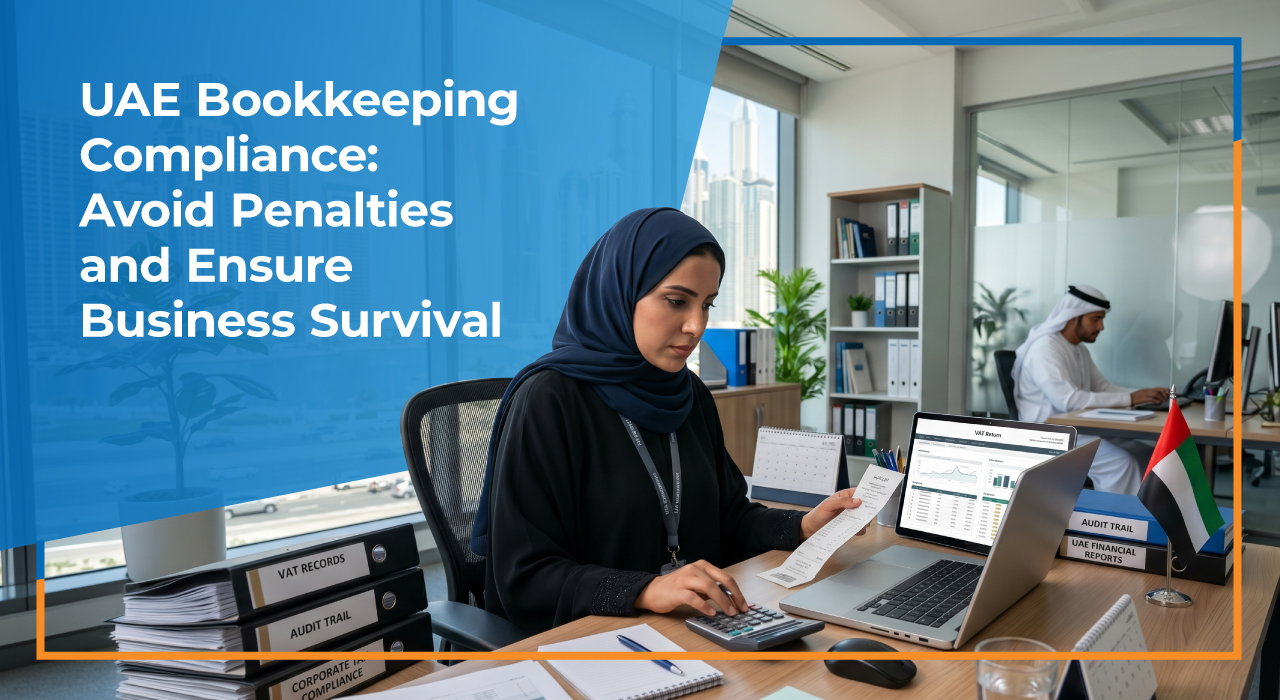
Running a business in the UAE offers immense opportunities, but it also comes with increasing financial and regulatory responsibilities. From VAT compliance and corporate tax regulations to audit readiness and accurate reporting, businesses today must maintain proper financial records to stay legally compliant and financially healthy. Ignoring bookkeeping obligations may seem harmless at first, but over time it can lead to penalties, cash flow disruptions, reputational damage, and even business closure.
This is why bookkeeping compliance UAE has become one of the most important operational priorities for businesses of all sizes. Whether you are a startup, SME, free zone company, or an established enterprise, maintaining organised books is no longer optional. It is essential for survival, growth, and long-term sustainability.
Many businesses in the UAE initially focus only on sales, expansion, and customer acquisition while delaying accounting processes. Unfortunately, poor bookkeeping creates blind spots in financial management. Missing invoices, delayed reconciliations, inaccurate VAT filings, and incomplete records can quickly become serious legal and operational risks.
The UAE government has strengthened financial regulations over the years to ensure transparency and economic stability. Authorities now expect businesses to maintain detailed and accurate financial records that can be presented whenever required. Companies that fail to comply often face fines, audits, or difficulties in renewing licenses and obtaining banking support.
This blog explains why bookkeeping compliance matters, the major requirements businesses must follow, the penalties associated with non-compliance, and how professional support can help businesses stay protected.
Why Bookkeeping Compliance Matters in the UAE
The UAE has transformed into a globally trusted business hub because of its structured regulatory framework and investor-friendly environment. To maintain this credibility, businesses are expected to follow proper accounting and reporting standards.
Bookkeeping is not just about recording income and expenses. It forms the foundation of every financial decision within an organisation. Proper bookkeeping helps businesses:

Monitor cash flow accurately

Track profits and losses

Prepare VAT and tax filings

Maintain transparency

Prevent fraud and financial errors

Support business expansion

Improve investor confidence

Stay prepared for audits
Without proper bookkeeping, businesses often struggle to understand their financial position. Decisions become reactive instead of strategic.
For example, a company may appear profitable based on sales figures but could actually be facing liquidity problems because expenses and receivables are poorly tracked. Similarly, incorrect VAT calculations can result in penalties that directly impact profitability.
In recent years, bookkeeping compliance UAE has gained even more importance due to the introduction of corporate tax regulations and stronger anti-money laundering frameworks. Businesses are now expected to maintain records with greater accuracy and consistency.
Proper bookkeeping also improves communication with banks, investors, and regulatory authorities. Financial institutions often review accounting records before approving loans or financial facilities. Inaccurate or incomplete records can reduce credibility and delay approvals.
Businesses that maintain compliance from the beginning usually experience smoother operations, better financial visibility, and stronger business resilience.
Understanding UAE Financial Regulations
The UAE’s regulatory environment is designed to promote transparency and accountability. Businesses operating in mainland UAE and free zones are expected to maintain proper financial records according to the law.
Some of the key regulations influencing bookkeeping practices include:

VAT Regulations
Since the implementation of Value Added Tax (VAT), businesses crossing the mandatory registration threshold are required to maintain proper transaction records and submit accurate tax returns within deadlines. Incorrect VAT filings, missing invoices, or poor documentation can lead to heavy fines.

Corporate Tax Requirements
The introduction of corporate tax has further increased the importance of accurate accounting systems. Businesses must now maintain proper records to calculate taxable income and demonstrate compliance during reviews or audits.

Anti-Money Laundering Regulations
Businesses in certain sectors are required to maintain financial transparency and monitor suspicious transactions. Proper bookkeeping supports compliance with these obligations.

Audit and Financial Reporting Expectations
Many companies, especially in free zones, are required to submit audited financial statements annually. This is impossible without well-maintained books of account. As regulations continue evolving, businesses can no longer rely on informal accounting methods or delayed financial management practices.
To Know more about the taxes in the UAE, read the blog: Comprehensive guide to taxes in UAE – Income Tax, Property Tax, Corporate Tax UAE and more. | nairnelliyatt.com
Common Bookkeeping Mistakes Businesses Make
Many businesses unintentionally create compliance risks because they underestimate the importance of consistent accounting practices.
Here are some of the most common bookkeeping mistakes seen in UAE businesses:
Delayed Data Entry
Waiting weeks or months to record transactions leads to missing data, inaccurate reports, and confusion during tax filing periods.
Mixing Personal and Business Expenses
Using the same accounts for personal and business transactions creates accounting complications and affects financial transparency.
Poor Invoice Management
Missing invoices and receipts can create issues during audits and VAT claims.
Incorrect VAT Calculations
Manual errors in VAT calculations often lead to penalties and regulatory scrutiny.
Lack of Bank Reconciliation
Failing to reconcile bank statements regularly may result in unnoticed discrepancies or fraudulent transactions.
Ignoring Documentation Requirements
Businesses sometimes fail to maintain records for the legally required retention period.
Dependence on Spreadsheets Alone
While spreadsheets may work initially, growing businesses require more structured accounting systems to maintain compliance efficiently.

These mistakes often appear minor in the beginning but gradually create larger operational and financial risks.
Bookkeeping Compliance Requirements Every UAE Business Must Know
Understanding the major bookkeeping compliance requirements is essential for avoiding penalties and maintaining business continuity.
Maintaining Proper Financial Records
Businesses must maintain complete and accurate records of:
- Sales invoices
- Purchase invoices
- Expense records
- Payroll information
- Bank statements
- VAT records
- Contracts and agreements
These records should be updated regularly and stored securely.
Retaining Records for the Required Duration
UAE regulations generally require businesses to retain financial records for several years. Missing records during audits can create major compliance issues.
Accurate VAT Documentation
VAT-registered businesses must maintain:
- Tax invoices
- Debit and credit notes
- VAT return filings
- Import and export documentation
Even small discrepancies in VAT documentation may trigger penalties.
Timely Financial Reporting
Companies must prepare periodic financial reports that accurately reflect business performance. These reports help management make informed decisions while supporting compliance obligations.
Audit Readiness
Businesses should maintain books in a way that supports smooth auditing whenever required. Poor organisation during audits can delay processes and increase scrutiny.
Compliance With Corporate Tax Regulations
Businesses now need accurate financial statements to determine taxable profits and comply with corporate tax obligations.
Proper Payroll Records
Employee salary records, leave calculations, gratuity provisions, and payroll documentation should be maintained systematically.
Separation of Financial Activities
Business owners should maintain clear separation between personal and company finances to ensure transparency.
Following these bookkeeping compliance requirements helps businesses reduce legal risks while strengthening operational efficiency.
The Real Cost of Non-Compliance
Many businesses view bookkeeping as an administrative burden rather than a strategic necessity. However, non-compliance can have serious financial and operational consequences.
Financial Penalties
Regulatory fines for incorrect filings, delayed submissions, or missing records can quickly accumulate.
Business Disruptions
Poor bookkeeping may delay tax submissions, audits, or financial reporting processes, affecting business continuity.
Loss of Credibility
Banks, investors, and stakeholders may lose confidence in businesses with disorganised financial records.
Increased Audit Risks
Non-compliant businesses are more likely to attract regulatory attention and deeper investigations.
Cash Flow Problems
Inaccurate financial tracking can result in overspending, delayed collections, or budgeting failures.
Legal Consequences
Repeated compliance failures may lead to legal complications or operational restrictions.
Difficulty in Business Expansion
Expansion opportunities often require transparent financial reporting. Businesses with incomplete records struggle to secure partnerships or investments.
The cost of fixing years of poor bookkeeping is often much higher than maintaining compliance from the beginning.
The Role of Technology in Modern Bookkeeping
Technology has transformed the way businesses manage financial operations.
Modern accounting software helps businesses:
- Automate invoicing
- Track expenses in real time
- Generate VAT reports
- Monitor cash flow
- Reduce human errors
- Improve financial visibility
- Store records securely
- Simplify audit preparation
Cloud-based accounting systems also allow business owners to access financial information from anywhere, improving decision-making and operational flexibility.
However, technology alone is not enough. Businesses still require professional oversight to ensure compliance with UAE regulations.
Building an Effective Accounting Compliance Checklist
Creating an organised accounting compliance checklist helps businesses stay proactive instead of reactive.
Below is a practical checklist businesses can follow:

Daily Compliance Tasks
- Record all transactions accurately
- Upload invoices and receipts
- Monitor cash flow movements
- Verify payment collections

Weekly Compliance Tasks
- Reconcile bank transactions
- Review pending invoices
- Monitor expense categories
- Check payroll updates

Monthly Compliance Tasks
- Prepare financial statements
- Reconcile VAT accounts
- Review profit and loss reports
- Analyse outstanding receivables
- Verify supplier balances

Quarterly Compliance Tasks
- Review tax obligations
- Evaluate budgeting performance
- Conduct internal financial reviews
- Assess operational costs

Annual Compliance Tasks
- Prepare audit documents
- Finalise financial statements
- Review corporate tax obligations
- Renew accounting policies if necessary
- Ensure document retention compliance
An organised accounting compliance checklist helps businesses reduce last-minute stress while ensuring consistency throughout the year.
How Professional Bookkeeping Services Help Businesses
Many business owners try managing accounts internally during the early stages. While this may work temporarily, growing businesses usually require expert support to maintain compliance effectively.
Professional bookkeeping providers help businesses by:
Ensuring Regulatory Compliance
Experts stay updated with changing UAE laws and reporting requirements.
Reducing Errors
Professional oversight minimises calculation mistakes and reporting inaccuracies.
Saving Time
Business owners can focus on operations and growth instead of administrative accounting tasks.
Improving Financial Visibility
Well-maintained books provide better insight into business performance.
Supporting Tax Preparation
Accurate bookkeeping simplifies VAT and corporate tax compliance.
Preparing for Audits
Professionally maintained records reduce audit-related stress and delays.
Enhancing Decision-Making
Reliable financial reports support better strategic planning.
To know why Bookkeeping services has to be outsourced, read the blog: 10 definitive reasons for hiring business consulting companies in UAE. | nairnelliyatt.com
Why SMEs Are Most Vulnerable to Compliance Issues
Small and medium-sized businesses often face the highest compliance risks because they operate with limited resources and lean teams.
Common SME challenges include:
- Lack of accounting expertise
- Delayed financial reporting
- Cash flow pressures
- Inadequate documentation systems
- Limited internal controls
Many SMEs postpone bookkeeping until tax deadlines or audits approach. Unfortunately, this reactive approach increases compliance risks significantly.
SMEs that invest in proper bookkeeping from the beginning usually experience:
- Better financial stability
- Improved cash management
- Easier tax compliance
- Faster business growth
- Greater investor confidence
Bookkeeping should not be viewed as an expense. It is a business protection mechanism.
Signs Your Business Needs Immediate Bookkeeping Support
Businesses should seek professional assistance if they experience any of the following:
- Frequent accounting errors
- Delayed VAT filings
- Missing invoices or receipts
- Unclear cash flow position
- Difficulty preparing reports
- Increasing compliance notices
- Payroll inconsistencies
- Audit preparation challenges
Ignoring these warning signs can create long-term operational problems.

Best Practices for Maintaining Bookkeeping Compliance
Businesses can strengthen compliance by following these practical strategies:
Maintain Real-Time Records.
Do not delay transaction recording.
Use Reliable Accounting Software.
Invest in systems designed for business scalability and compliance.
Conduct Regular Reviews.
Review financial reports monthly instead of waiting until year-end.
Train Employees.
Employees handling financial data should understand documentation requirements.
Separate Duties.
Avoid giving complete financial control to a single individual without oversight.
Back Up Financial Data.
Ensure records are securely stored and protected against data loss.
Work With Professionals.
Seek expert guidance when handling VAT, tax, payroll, or audit-related matters.
Consistency is the key to long-term compliance success.
The Future of Financial Compliance in the UAE
The UAE continues strengthening its position as a leading global business destination. As regulations evolve, businesses will likely face even greater expectations regarding transparency and reporting accuracy.
Future trends may include:
- Increased digital reporting
- Stronger tax monitoring
- Automated compliance systems
- Greater audit scrutiny
- Enhanced anti-money laundering controls
Businesses that establish strong accounting foundations today will be better prepared for future regulatory developments. Compliance is no longer only about avoiding penalties. It is about building sustainable and trustworthy businesses.

In today’s competitive and regulated environment, maintaining proper bookkeeping practices is essential for every UAE business. Delayed accounting, inaccurate records, and weak compliance systems can expose businesses to financial penalties, operational disruptions, and reputational risks.
Adopting strong bookkeeping compliance UAE practices helps businesses stay legally protected, financially organized, and operationally efficient. From VAT obligations to corporate tax readiness, proper bookkeeping plays a central role in long-term business sustainability.
Businesses should not wait for audits or penalties before taking compliance seriously. A proactive approach ensures smoother operations, better financial decision-making, and stronger growth opportunities.
Whether you are a startup, SME, or expanding enterprise, having the right financial partner can make all the difference. With professional bookkeeping services in UAE from NNCA, businesses can streamline compliance, maintain accurate financial records, reduce operational risks, and stay confidently prepared for audits and regulatory changes.