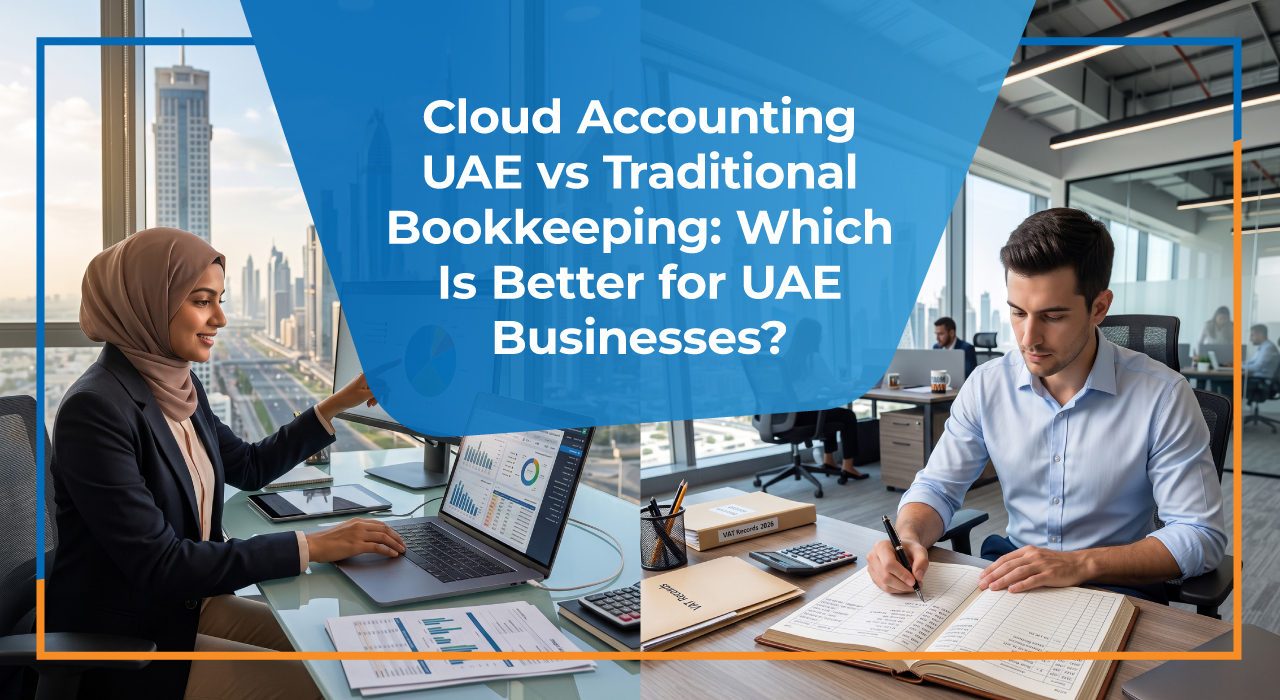
The way businesses manage their finances has changed significantly over the last decade. Paper-based records, manual spreadsheets, and physical ledgers are steadily being replaced by digital systems that deliver real-time financial visibility and greater operational control.
For firms operating in the UAE, this change has become even more relevant. With VAT compliance requirements, increasing competition, and the need for accurate financial reporting, companies are actively looking for smarter ways to manage their accounts.
This is where cloud accounting solutions in the UAE have gained popularity. They enable businesses to access financial information anytime, from anywhere, while improving accuracy and collaboration. At the same time, many companies continue to rely on traditional bookkeeping methods that have served them for years.
So which approach is better?
The answer depends on your business goals, operational requirements, and long-term growth plans. Understanding the strengths and limitations of both systems can help business owners make well-informed financial decisions.
In this article, we compare cloud accounting and traditional bookkeeping across multiple factors to determine which solution is best suited for UAE businesses.
Understanding Traditional Bookkeeping
Traditional bookkeeping refers to the process of recording financial transactions manually or through locally installed accounting systems. Businesses generally maintain physical records, spreadsheets, invoices, receipts, and accounting documents that are stored in-house.
For decades, this method has been the standard approach used by businesses worldwide.
A traditional bookkeeping system generally includes:

Recording sales and purchases manually

Maintaining physical invoices and receipts

Updating ledgers periodically

Generating financial reports at specific intervals

Storing financial records on local computers or physical files
Many small businesses initially prefer traditional bookkeeping because it appears simple and familiar. However, as businesses grow, the limitations of manual processes frequently become more evident.
What Is Cloud Accounting?
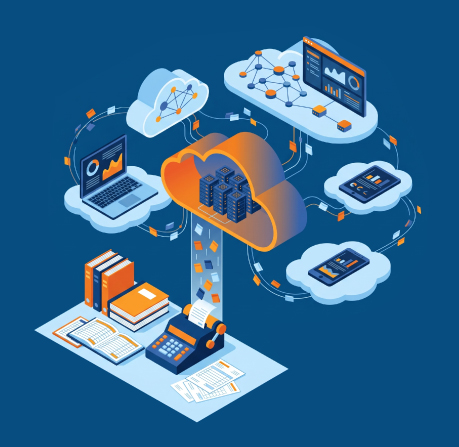
Cloud accounting refers to accounting software hosted on remote servers and accessible via the internet. Instead of storing financial data on a single computer or maintaining physical records, businesses can securely access their accounting information through web-based platforms.
Modern cloud accounting solutions in the UAE enable business owners, accountants, and finance teams to collaborate in real time from different locations.
Key features often include:
- Real-time financial reporting
- Automated bank reconciliation
- VAT management
- Invoice generation
- Expense tracking
- Multi-user access
- Secure cloud storage
- Automated backups
These systems are increasingly becoming the preferred selection for businesses seeking greater efficiency and financial visibility.
Why Cloud Accounting Is Gaining Popularity in the UAE?
The UAE has established itself as one of the world’s most progressive business hubs. Government initiatives promoting digital transformation, combined with a fast-evolving regulatory environment, have encouraged businesses to modernise their operations.
Accounting has naturally become part of this transformation.
One major factor driving adoption is the need for accurate VAT compliance. Since VAT was introduced, businesses have been required to maintain detailed financial records and submit accurate tax filings. Manual systems can increase the risk of errors, especially as transaction volumes grow.
Cloud accounting simplifies many of these requirements by automatically categorising transactions, generating VAT reports, and maintaining organised records that can be retrieved when needed.
Another important factor is the changing nature of work. Business owners today are rarely confined to a single office location. They may be travelling between Emirates, managing multiple branches, attending client meetings, or overseeing operations from abroad. Having immediate access to financial information has become a necessity rather than a convenience.
Cloud accounting provides accessibility without compromising security.
Furthermore, investors, lenders, and stakeholders increasingly expect timely financial reporting. Businesses that can quickly generate accurate reports often have a stronger foundation for obtaining funding, managing growth, and making important decisions. Financial reports generated in real time allow management teams to respond quickly to opportunities and challenges.
Instead of reviewing outdated reports prepared weeks later, business owners can monitor cash flow and profitability in real time.
When businesses expand, financial operations become more complex.
Cloud platforms can easily accommodate:

Additional users

Multiple branches

New revenue streams

Increased transaction volumes
This makes them particularly attractive for growing businesses.
Comparing Cloud Accounting and Traditional Bookkeeping
To determine which option is better, it is important to compare both systems across critical business functions.
Accessibility: The Difference Between Waiting and Knowing
One of the most noticeable differences between cloud accounting and traditional bookkeeping is accessibility.
Under traditional bookkeeping systems, financial records commonly remain tied to a physical location. Reports may need to be prepared manually before management can review them. If key personnel are unavailable, obtaining financial information can become difficult.
Consider a business owner travelling internationally who wants to review cash flow performance before approving a major investment. With a traditional system, obtaining current financial information may require contacting staff, requesting reports, and waiting for data to be compiled.
Cloud accounting eliminates these delays.
Business owners can log in to their accounting platform and immediately access the most recent financial information. Revenue trends, outstanding receivables, operating expenses, and cash flow positions are available in real time.
This ability to access information instantly enables businesses to make faster, more well-informed decisions. In a highly competitive market environment, speed often creates a significant advantage.
Accuracy and Error Reduction in Financial Management
Every accounting system depends on the accuracy of its records. Even minor bookkeeping errors can create significant consequences, affecting financial reporting, tax compliance, and business planning.
Traditional bookkeeping relies heavily on manual data entry. While experienced accountants strive for accuracy, manual processes naturally introduce opportunities for mistakes. Numbers can be entered incorrectly, transactions may be duplicated, and important records can occasionally be overlooked.
As transaction volumes increase, the probability of human error often increases as well.
Cloud accounting addresses many of these challenges through automation. Transactions can be imported directly from bank accounts, recurring entries can be scheduled automatically, and calculations are performed by the system rather than manually.
This does not eliminate the need for professional oversight, but it substantially reduces routine errors that commonly occur in manual bookkeeping environments.
More importantly, businesses gain confidence in the reliability of their financial information. Accurate data leads to improved decision-making, better forecasting, and stronger compliance.
Security: A Growing Concern for Modern Businesses
Many business owners initially assume that keeping records physically within their office provides greater security. While this belief is understandable, the reality is often more complex.
Physical records are vulnerable to theft, fire, accidental damage, and misplacement. Desktop-based accounting systems also face risks associated with hardware failure, outdated software, and inadequate backup procedures.
A single computer malfunction can potentially result in significant data loss if proper backups are not maintained.
Modern cloud accounting platforms are designed with security as a priority. Reputable providers invest heavily in encryption technologies, secure data centres, multi-factor authentication, and continuous monitoring systems.
Financial information is typically automatically backed up, reducing the risk of permanent data loss.
For many businesses, cloud accounting offers stronger protection than standard methods because security measures are managed by specialised technology providers rather than relying solely on internal processes.
Cost Considerations:
When evaluating accounting systems, many business owners focus primarily on direct costs. At first glance, traditional bookkeeping may appear less expensive because it does not require ongoing software subscriptions.
However, the true cost of bookkeeping goes beyond software fees.
Manual bookkeeping often requires substantial administrative time. Staff spend hours entering transactions, organising documents, reconciling accounts, generating reports, and correcting errors. These labour costs accumulate over time.
There are also indirect costs associated with physical storage, document management, and the maintenance of internal systems.
Cloud accounting introduces subscription-based pricing, but many businesses discover that automation significantly reduces administrative workloads. Tasks which once required hours can often be completed within minutes.
The result is not merely cost savings but improved productivity. Employees can focus on higher-value activities rather than repetitive administrative work.
Over the long term, the efficiency gains from cloud-based solutions frequently outweigh the investment required.
Reporting Capabilities
Traditional Bookkeeping Generating reports often requires manual compilation.
This process can be:
- Time-consuming
- Labor-intensive
- Prone to delays
Management decisions may be based on outdated information.
Cloud Accounting
Financial reports can be generated instantly.
Common reports include:
- Profit and loss statements
- Balance sheets
- Cash flow reports
- VAT summaries
- Accounts receivable reports
Decision-makers gain immediate visibility into business performance.
How Cloud Bookkeeping Services Improve Business Operations:
The Value of Cloud Bookkeeping Services for UAE Businesses:
Accounting is no longer just about recording transactions. Businesses increasingly expect their financial systems to provide insights that support growth and strategic decision-making.
This is where professional cloud bookkeeping services deliver considerable value.
Rather than simply maintaining records, cloud-based bookkeeping enables continuous financial monitoring and proactive management. Business owners can review financial status throughout the month rather than wait until month-end reports are prepared.
Professional bookkeepers working in cloud environments can identify issues earlier, monitor cash flow more effectively, and provide timely financial information to support decision-making.
For growing businesses, this level of visibility is particularly valuable. Expansion often introduces new financial complexities, including increased transaction volumes, multiple revenue streams, inventory management challenges, and compliance requirements.
Cloud bookkeeping allows these complications to be managed more efficiently while maintaining accurate financial records.
The result is a bookkeeping function that actively contributes to business success rather than simply documenting historical activity.
Benefits include:

Real-Time Financial Monitoring
Business owners gain continuous visibility into financial performance.
They can quickly identify:
- Revenue trends
- Expense patterns
- Cash flow issues
- Outstanding payments

Reduced Administrative Burden
Automation minimises repetitive tasks such as:
- Data entry
- Invoice processing
- Reconciliations
This allows employees to focus on strategic activities.

Improved Collaboration
Business owners, accountants, auditors, and finance teams can work from the same data source.
This eliminates confusion caused by multiple spreadsheet versions.

Better Compliance
Professional bookkeeping support helps businesses maintain accurate record-keeping and keep aligned with governing regulations.
The Impact of Online Accounting Software UAE Businesses Use Today
The increasing adoption of online accounting software by UAE businesses shows a broader change in how companies approach financial management.
Traditional accounting systems regularly function as record-keeping tools. Information is entered, stored, and reviewed periodically. While this approach fulfills basic accounting requirements, it does not always support dynamic business decision-making.
Online accounting platforms take a different approach.
They provide business owners with real-time dashboards, instant reporting capabilities, automated workflows, and integrated financial management tools. Rather than waiting for monthly reports, management teams can continuously monitor business performance.
For example, a company experiencing unexpected increases in operating expenses can identify the trend quickly and investigate the cause before it significantly impacts profitability.
Similarly, businesses can track receivables more effectively, improving cash flow management and reducing collection delays.
As UAE businesses continue embracing digital transformation, online accounting software is becoming an increasingly important part of business strategy. For UAE businesses, these features simplify compliance while providing valuable business insights.
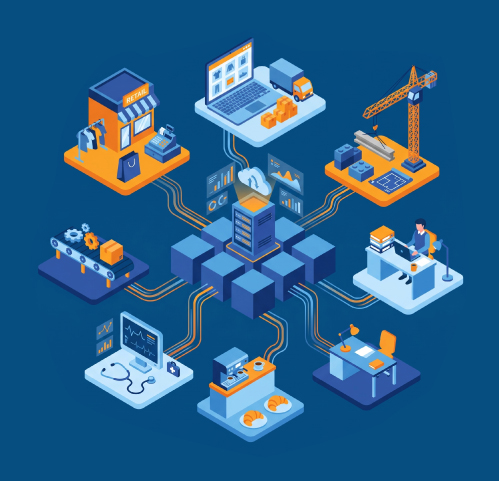
Industries progressively adopting online accounting solutions include:
- Retail
- E-commerce
- Construction
- Professional services
- Hospitality
- Healthcare
- Manufacturing
The flexibility and efficiency offered by these systems make them suitable for businesses of all sizes.
Compliance and Regulatory Readiness
Regulatory compliance remains one of the most important responsibilities for businesses operating in the UAE. Accurate record-keeping is essential not only for VAT compliance as well as for audits, financial reporting, and corporate governance requirements.
Traditional bookkeeping systems can certainly support compliance when managed properly. However, upholding compliance often requires substantial manual effort and careful oversight.
Cloud accounting simplifies many compliance-related tasks. Financial records are organised systematically, reports can be generated quickly, and supporting documentation is often stored digitally alongside transactions. This creates a more structured environment for maintaining compliance and responding to regulatory requirements. For businesses seeking to reduce compliance risks, cloud accounting provides a significant operational advantage.
Situations Where Traditional Bookkeeping May Still Work
Despite the advantages of cloud accounting, traditional bookkeeping is not entirely obsolete.
It may still be suitable for:

Very Small Businesses
Businesses with limited transactions may find manual systems manageable.

Businesses With Minimal Technology Adoption
Some organisations are comfortable with established manual processes and may not yet require advanced automation.

Temporary Operations
Short-term projects with simple accounting requirements may continue using classic methods. However, even these businesses often transition to cloud systems as operations expand.
Challenges Businesses Face When Sticking With Traditional Methods
Companies relying solely on traditional bookkeeping frequently encounter difficulties such as:
Delayed Financial Visibility
Reports are often generated after transactions occur, limiting timely decision-making.
Increased Risk of Human Error
Manual processes increase the likelihood of inaccuracies.
Higher Administrative Workload
Employees spend more time maintaining records rather than analysing business performance.
Difficulty Scaling
As transaction volumes increase, manual bookkeeping becomes harder to manage efficiently.
Compliance Risks
Regulatory requirements demand accurate records and timely reporting. Manual systems can make compliance more challenging.
To know more about traditional bookkeeping services, read the blog https://nairnelliyatt.com/outsourcing-accounting-and-bookkeeping-services-in-dubai

Why UAE Businesses Are Prioritising Digital Financial Management
The UAE’s business environment continues to evolve rapidly.
Organisations are under increasing pressure to:

Improve efficiency

Maintain compliance

Reduce costs

Enhance customer service

Support growth initiatives
Cloud accounting directly addresses these objectives by providing faster access to financial information and reducing administrative complexity. Additionally, investors, lenders, and stakeholders increasingly expect businesses to maintain organised, transparent financial records. Digital accounting systems help meet these expectations while supporting better governance.
Selecting the Right Accounting Solution for Your Business
Before choosing between traditional bookkeeping and cloud accounting, consider the following questions:
How Many Transactions Does Your Business Process?
Growing transaction volumes often justify automation.
Do You Need Real-Time Financial Information?
Businesses that rely on timely decision-making benefit significantly from cloud platforms.
Are You Planning to Scale?
Expanding businesses require systems that can grow alongside operations.
Do You Have Compliance Concerns?
Accurate VAT reporting and record maintenance are easier with automated solutions.
How Much Time Is Spent on Administrative Tasks?
If accounting processes consume excessive time, cloud solutions may improve efficiency.
Evaluating these factors helps identify the most suitable approach.
The Future of Accounting in the UAE
The future of accounting is increasingly digital.
Businesses across the UAE are investing in technologies that improve efficiency, support growth, and enhance financial visibility. Accounting systems are becoming more integrated with broader business operations, providing valuable insights that extend beyond basic record-keeping.
Cloud accounting sits at the centre of this transformation.
As automation capabilities continue to evolve and regulatory expectations increase, businesses that embrace modern accounting technologies will likely be better positioned to respond to changing market conditions.
The shift is no longer limited to large enterprises. Small and medium-sized businesses are adopting cloud solutions because they recognise the operational advantages these systems provide.
Accounting is evolving from a historical reporting function into a strategic business tool.
Read the blog to understand the reasons for hiring business consulting companies in the UAE.
10 definitive reasons to hire business consulting companies in the UAE. | nairnelliyatt.com
Conclusion
The comparison between cloud accounting and traditional bookkeeping ultimately comes down to efficiency, accessibility, scalability, and business readiness.
Traditional bookkeeping has served businesses well for many years and may still be suitable for organisations with very simple financial requirements. However, as businesses grow and regulatory expectations become more demanding, the limitations of manual systems become increasingly difficult to ignore.
Cloud accounting offers a more modern approach. It provides real-time access to financial information, improves accuracy through automation, strengthens data security, supports compliance, and enables better decision-making.
For most UAE businesses, particularly those focused on growth and operational efficiency, cloud accounting represents a significant step forward.
If your business is looking to modernise its financial processes, improve reporting, and gain greater visibility into its performance, professional bookkeeping services in the UAE can help you transition smoothly to a cloud-based accounting environment.
Ready to streamline your accounting operations? Partner with experienced providers of bookkeeping services in the UAE and discover how cloud accounting can support your business growth, compliance, and long-term success.
When comparing cloud accounting and traditional bookkeeping, the advantages of cloud-based systems are difficult to ignore.
Cloud accounting offers:
- Real-time financial insights
- Improved accuracy
- Enhanced security
- Greater accessibility
- Better scalability
- Stronger compliance support
While traditional bookkeeping may still suit certain small businesses with simple operations, most growing UAE companies benefit significantly from transitioning to cloud-based accounting solutions.
As business environments become increasingly digital, companies that adopt modern accounting technologies position themselves for better financial management and long-term success.
Need Professional Support?
Whether you are transitioning to a digital accounting system or looking to improve financial efficiency, we at NNCA, with expert bookkeeping services in the UAE, can help streamline your operations and maintain accurate financial records.
Need Professional Support?
Whether you are transitioning to a digital accounting system or looking to improve financial efficiency, we at NNCA, with expert bookkeeping services in the UAE, can help streamline your operations and maintain accurate financial records.